Style · 6 min read
Find your wedding style without a moodboard spiral
Use a few honest prompts to create a cohesive look without chasing every trend.
Read the guide →Style · 5 min read · Updated August 2026
Start with how you want to move through the day, then make visual choices that feel like your own.
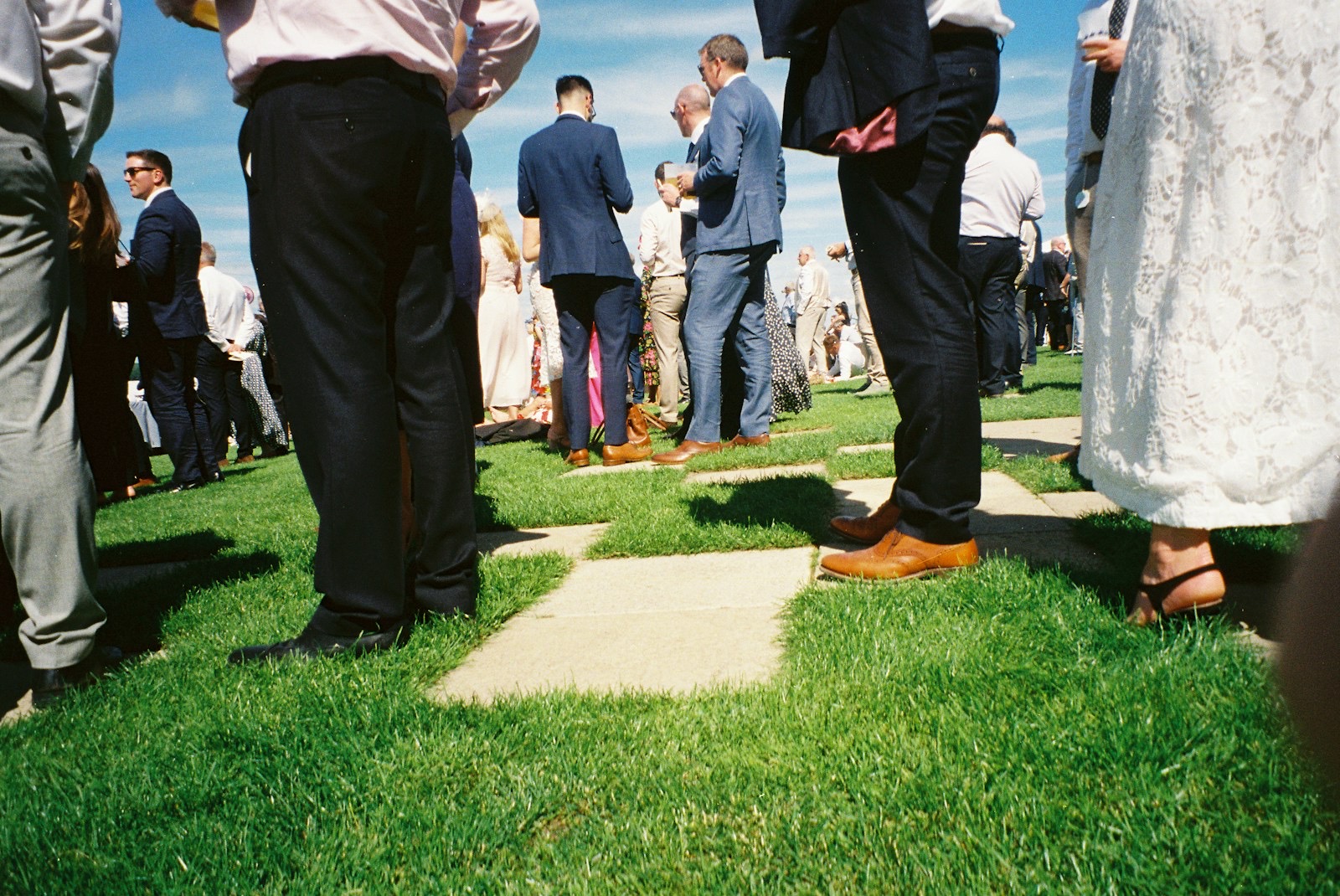
Choose attire by pairing personal expression with the actual conditions of the day: location, weather, movement, traditions, comfort, alterations and time. Try options in motion, plan layers or changes where useful, and make room for every person to feel like themselves rather than fitting a prescribed role.
Wedding attire is often discussed as a look to achieve. It can be more useful to begin with a day to live in. Think about where you will walk, sit, stand, eat, greet people, dance, travel and take a quiet break. Note whether the ceremony is outdoors, whether temperatures may change, whether you will move between spaces, and whether a tradition asks something specific of the clothing.
Then name the feeling you want. You might want to feel formal, soft, festive, understated, protected, playful, traditional, surprising or simply like yourself. These words can guide choices without narrowing you to one silhouette or department. A person can wear a suit, dress, separates, cultural attire, something borrowed, something tailored, something practical or a combination that changes through the day.
If you are planning with a partner or a group, avoid making one person’s outfit the default visual center and everyone else’s an accessory. Talk about how each person wants to feel, what matters to them and what coordination would actually be useful. A shared color, level of formality or fabric feeling can create cohesion without requiring anyone to disappear into a theme.
When you try on an option, sit down, raise your arms, take a few steps, turn, reach for a glass of water and imagine using the restroom. If the day includes dancing, walk or move enough to notice restrictions. A garment can look right in a still photograph and still demand too much attention when you wear it for several hours.
Consider the elements underneath and around the main outfit: shoes, underlayers, outerwear, jewelry, hair, a bag, a garment cover, any cultural pieces and the way clothing fastens. You do not need a second outfit or a collection of accessories to be prepared. You may simply need a shoe you can walk in, a layer for evening, a familiar fabric against the skin or a pocket for a small essential.
Alterations and tailoring can change fit, movement and timing. Ask the professional handling the work what decisions they need from you and when. Bring the shoes or underlayers that affect length or shape when they are requested. Leave enough room for adjustments without treating a body change as a requirement. Clothing should be adapted for the person wearing it, not the other way around.
The venue can help you decide how formal or practical to be. A long outdoor walk, sand, grass, stairs, a historic building, a religious space, strong air conditioning or an evening temperature change may all matter. Ask the venue about changing spaces, storage, garment steaming, hooks, mirrors or a private room if those details would make the day easier.
Consider what you are asking guests to wear, too. A dress code should offer direction rather than create a test. Describe the level of formality, setting and weather exposure plainly. If an outdoor path, grass, stairs or long walk is involved, say so. If a cultural dress tradition is welcome or important, explain it with care and avoid requiring people to buy something unfamiliar unless they genuinely want to participate.
Comfort supports style. A person who can breathe, move, eat and be warm enough is more able to connect with the people around them. That does not mean every choice must be casual. It means you can treat ease as a quality worth designing for.
Attire can carry family history, faith, gender expression, craft, memory or a wish to begin differently. Give those meanings room before outside opinions take over. You may choose to wear something inherited, to alter a familiar garment, to include an accessory from a loved one, or to choose something entirely new. None of these choices needs a universal explanation.
If an option no longer feels right, pause before forcing it because time or money has already been spent. There may be a small adjustment that changes the experience, or a simpler alternative that works better. Talk about the actual problem—fit, comfort, visibility, expectation, weather or budget—rather than treating uncertainty as a failure of style.
On the day, assign a trusted person to hold a small repair kit or help with a change if needed. Then let the clothing become background. The goal is not to preserve every detail perfectly. It is to wear something that lets you recognize yourself in the celebration.
Source notes
This is an original service guide based on editorial planning judgment. It makes no time-sensitive external factual claim and therefore has no inline citation. See `SOURCE-LEDGER.md` for the deterministic source mapping and editorial-method record.